
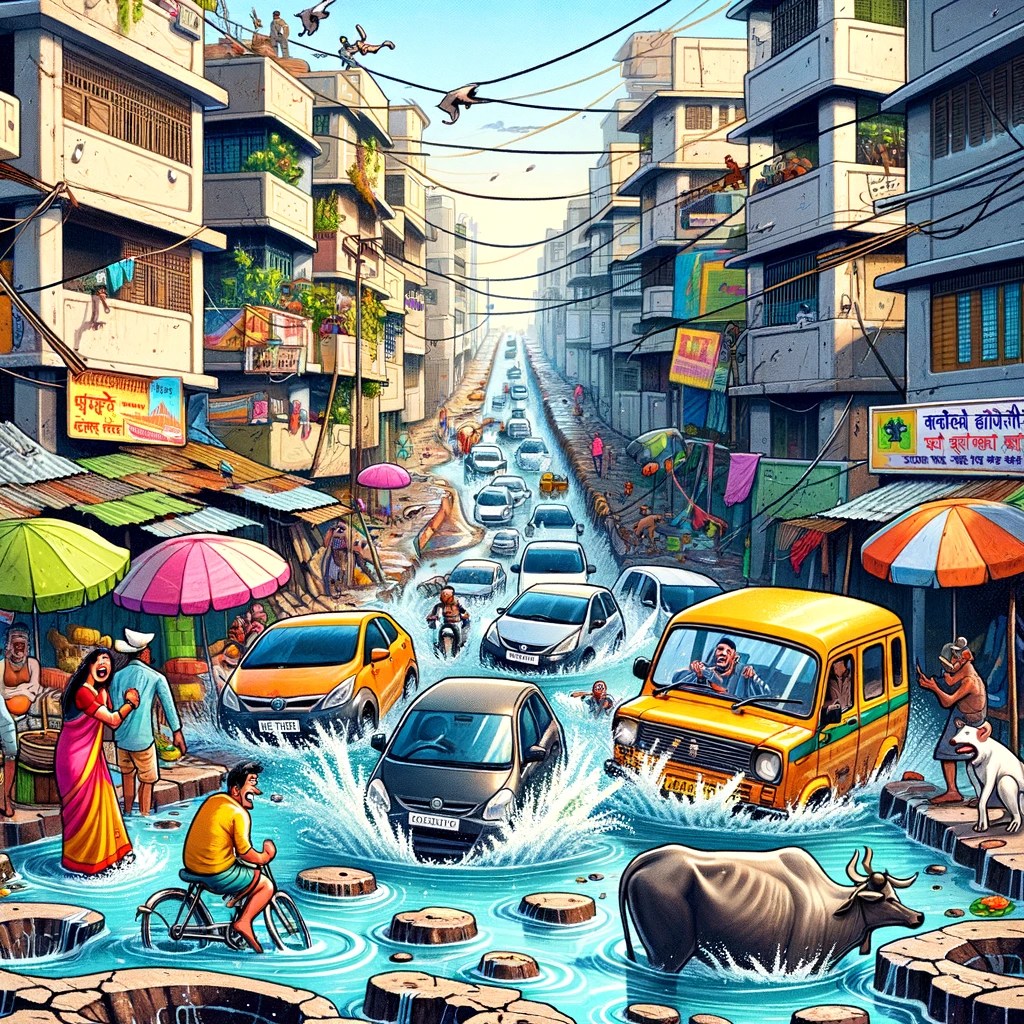
India is a burgeoning nation, forever in a state of development. A quintessential example of this development is Howrah, where the roads are perennially ‘developing’ — developing cracks, developing fissures, developing pot-holes, and a variety of other gaping characteristics.
It is worth mentioning that this insignificant discussion is regarding the historical Grand Trunk Road and its sister concern Howrah Road — the sole recognisable roads of Howrah. This discourse aims to shine a light on and celebrate the resilience of those who navigate these streets daily under the generous guise of development.
The irony of ‘development’ peaks during the underappreciated monsoon season. Eyewitnesses claim that parts of the roads have transformed so drastically, they seem to have undergone a metamorphosis, though officials are not convinced they are ready to pupate just yet.
In times of torrential downpour, these multifunctional roads double as makeshift drains for the town. With various tributaries and rivulets, the main roads form the primary stream of rainwater. This watercourse ultimately forms a delta-like structure and empties itself into the holy Ganges.
The actual depth of the water on these roads is a mystery until one wades through it, thanks to the myriad of holes creating an unpredictable terrain. The holes are available district-wide in an assortment of sizes, shapes and flavour. The most popular ones are the relatively shallow, crescent-shaped depressions, colloquially referred to as pot-holes. These are created due to the mutilation of neo-natal layer of asphalt by the relentless passage of trucks and lorries.
Moreover, these hazardous roads inadvertently serve as classrooms for an unorthodox form of scholarship — Holography in Howrah is not about holograms but mastering the art of Hole Classification and Management. This unique curriculum combines engineering, management, philosophy, and a touch of mythology and history. It’s freely available, save for the travel expenses, with the prospectus offered for a nominal bribe at the local municipal office. Every auto-rickshaw puller and cart driver in Howrah holds an unofficial degree in this craft, able to identify a pothole by sound alone in a technique reminiscent of bat echolocation. Those who wish to traverse these roads might benefit from such knowledge lest they need serious vehicle repairs.
Local physicians even suggest that a daily journey on these roads could cure a range of ailments from arthritis to insomnia — claims that are as outlandish as they are unverified.
From an academic perspective, Howrah’s roads offer a natural resource yet untapped. The local education board could well consider replacing traditional chemical analysis in school curriculums with an analysis of the rainwater here, which is rich in a mix of organic and inorganic substances. The greenish hue of the stagnant water, enriched with organic matter like cow dung, has even prompted discussions about its potential as an eco-friendly fuel alternative by the petrochemical industry.
There are proposals to enhance the ‘appeal’ of Howrah’s roads — from inviting famed adventurers to flag off flat-terrain mountaineering courses to suggesting NASA test its extraterrestrial rovers on this ‘Martian’ landscape.

Not to forget, these roads are a communal space shared by humans and animals alike, serving as bedrooms, dining rooms, and even lavatories. However, amidst discussions of aliens and livestock, it’s vital not to overlook the human residents of Howrah, who, every monsoon, receive an involuntary delivery of rainwater and refuse directly into their homes — a reminder of the perpetual diligence by authorities meant to maintain these roads.
I am extremely sorry that while discussing about aliens and non-human species, I almost completely forgot about the unmistakable and ever tolerant residents of Howrah. They are the luckiest of all human beings on earth. Every rainy day, they get a fresh supply of water right in their house. The entire ground floor of the roadside buildings gets flooded with rainwater. This service is absolutely free of cost. Excluding the occasional suspended garbage and sewage particles, the water is otherwise clean and safe.
The culprits behind the buoyant garbage are the most diligent workers of Howrah — the bureaucratic road sweepers. Everyday, they displace the garbage from the ever-clogged drains and pile the resurrected garbage, right beside the drains. During rainfalls, this facilitates swift retransportation of the garbage back into the drains. Fuelling this micro-climate cycle till eternity.
Not far in the distant past, someone attempted to restore the roads to their former glory. This initiative, unsurprisingly, coincided with the election season. The efforts commenced with great vigor; mountains of sand and stone chips emerged opposite the inadvertently famous Don Bosco School. Though the roads were temporarily mended, resembling patchwork on worn fabric, this proved not to be a lasting solution. The work halted abruptly, leaving the materials to be gradually reclaimed by nature and human interference — a sufficient endeavour, it seemed, for that electoral year. Perhaps annual elections would expedite more consistent roadwork?
It is ultimately the beloved G.T. Road and Howrah Road that forms the identity of the entire district. So much so that it reminds the words of one of our much-adored teacher: “The easy ones you did not do and the hard ones you could not do!” How can we then neglect all the perpetual inconveniences of the authorities towards repairing the alleged roads?
In conclusion, while the Howrah Municipal Corporation may interrupt these services during severe weather, the spirit and satire with which the residents of Howrah endure their circumstances deserve nothing but admiration and urgent attention. The convenience, indeed, is deeply regretted.


 Shamasis Bhattacharya
Leave a reply to Huzefa Johar Cancel reply